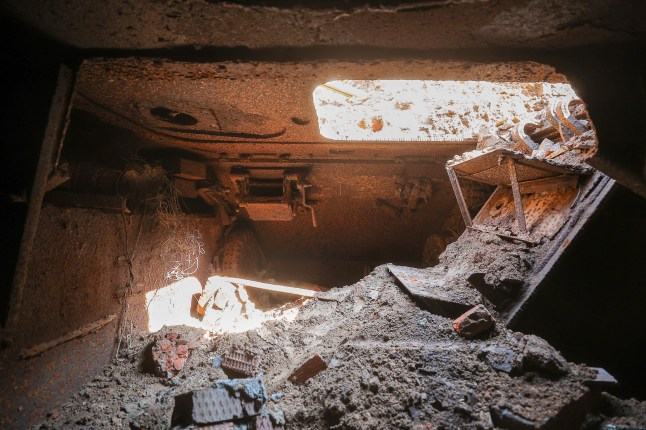
Inside the Panther tank,which was found buried under a university building in Russia (Picture: Yegor Aleyev/Cover Media)
A rare Nazi tank has been discovered buried beneath a university in Russia,decades after it was used for explosives testing.
The Second World War relic was uncovered during work at Kazan National Research Technological University (KNITU),in the west of the vast country.
Experts have since identified the armoured vehicle as a German Panther V – one of the most formidable tanks deployed by the Nazis during the war.
The discovery has caused a stir among historians and military enthusiasts because only around 20 have survived,a handful of which are in working condition.
A small section of the tank’s hull and rear turret is currently exposed,with the rest still buried underground.
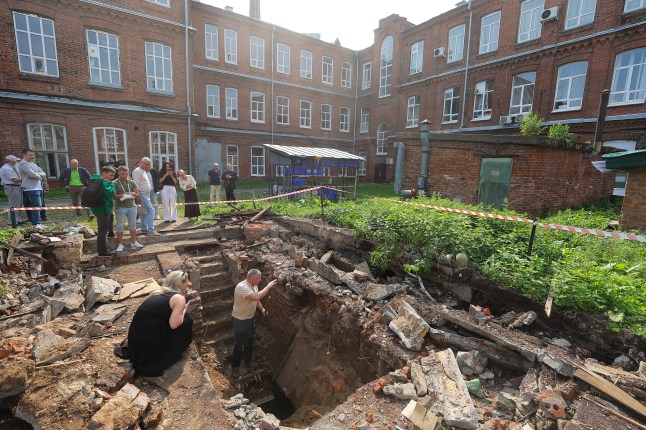
Students have been warned to keep away from the excavation as the soil might collapse (Picture: Yegor Aleyev/Cover Media)
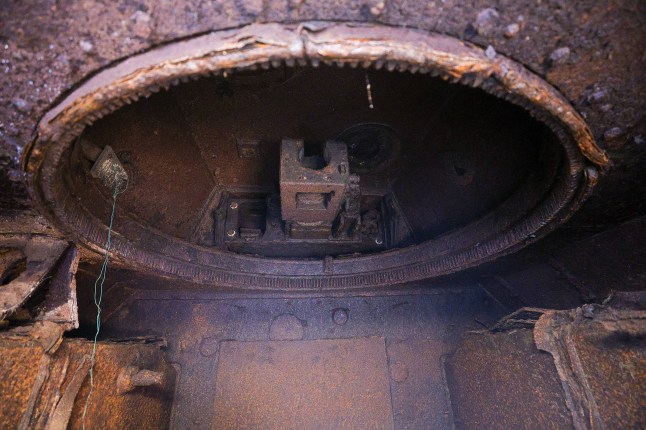 The tank was captured during the Second World War and was eventually used by the university for experiments (Picture: Yegor Aleyev/Cover Media)Alexander Alexandrov,director of the Great Patriotic War Memorial Museum in the Kazan Kremlin,said: ‘The value of this find lies in its authenticity.‘It’s an important part of the history of the Technological University,our city,and all of Tatarstan.’He added that neither his museum nor any other museum in the Republic of Tatarstan has such an exhibit.The Panther entered service in 1943 and surviving examples are now highly prized by military museums,particularly those which remain in working condition.According to KNITU,Russia currently has just one fully restored Panther,housed at the Central Museum of Armoured Vehicles and Equipment in Kubinka,near Moscow.Experts now face the considerable challenge of excavating the newly discovered vehicle without damaging it.
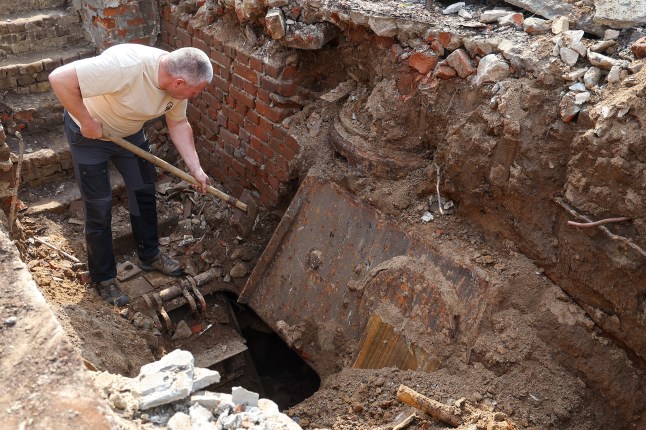 University officials and historians have been debating the tank’s future (Picture: Yegor Aleyev/Cover Media)Mr Alexandrov said: ‘The most important thing now is to uncover the monument,that is,excavate it,remove it,conserve it,and decide how it will be converted into a museum.’Denis Sakharnykh,head of the KNITU History Museum,said the find was significant for more than its military history.He said: ‘This tank is not only,or even so much,a monument to the history of military technology,but,first and foremost,a monument to the work of the special chemists at the Kirov Chemical Technology Institute.’A meeting was held on August 19 to discuss the tank’s future,involving university officials,historians and museum representatives.All repair work around the discovery has since been halted and the site cordoned off because of the danger of the surrounding earth collapsing.KNITU vice-rector Maxim Tyupich warned staff and students: ‘Do not cross the fence under any circumstances; the excavation pit walls are not reinforced in any way,and the ground could collapse!’