'I could talk to people who understood and start to rebuild my life in my own time.'
A lack of steady internet access is a concern among women’s aid groups,they told Metro (Picture: Getty Images/Metro)
When Lucy* fled an abusive relationship,she took everything she could. Her phone was not one of them.
Smartphones,however,are a hard thing not to have these days. A phone might even be needed to scan a QR code to look at a pub’s food menu.
They’re also needed to phone domestic abuse hotlines,access website chats and attend remote meetings with support workers.
But Lucy is now one of more than one million people in the UK to get online through a government-funded programme,according to a report shared exclusively with Metro.
After being given a phone by the charity Happy Tears Foundation,supported by Virgin Media O2,Lucy was able to contact counselling services.
‘Having my own phone made me feel safe again,’ Lucy said.
Campaigners tell Metro that phones and laptops are now a ‘daily necessity’,despite the price tags (Picture: Getty Images)
‘I could talk to people who understood and start to rebuild my life in my own time.’
Maria*,a single mother,knows this feeling well. When she escaped violence with her two young children,she lived in temporary accommodation and relied on social welfare to get by.
Without a laptop,the mum had no way to write up her CV and cover letter,let alone apply for the many jobs which rely on online portals.
But receiving a second-hand laptop through a government pilot scheme ‘made a big difference’ to her rebuilding her life away from the hold of violence.
The government launched its Digital Inclusion Action Plan last year to help vulnerable,disconnected people and off-the-grid communities get online.
Tech officials told Metro that all commitments made in the plan have been fulfilled.
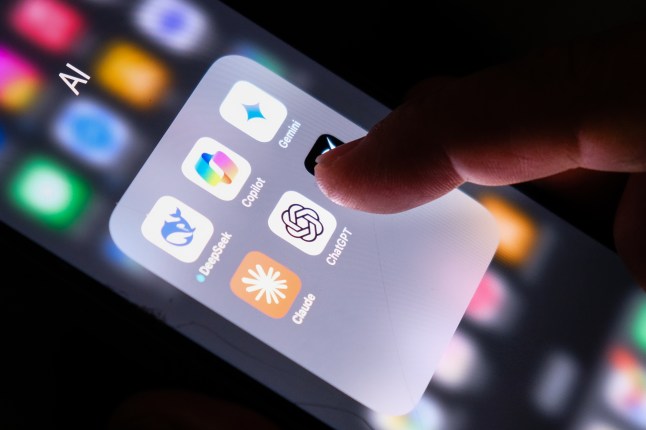
Knowledge of AI tools is increasingly becoming vital for jobs today (Picture: Getty Images)
This includes getting people plugged into the internet,securing more affordable rates and accessing support,devices and skills training.
More than 22,000 laptops,phones and tablets were donated by organisations like Virgin Media O2 to the government’s digital device donation pilot scheme.
The Department of Science and Technology confirmed to Metro that 41 organisations have so far signed up to a charter committing to recycle old electronics rather than chuck them in landfills.
Around 5% of people have no access to the internet at home,according to the media regulator Ofcom.
But anti-poverty campaigners have long warned that these figures likely underestimate how many people don’t have regular internet access.
Even if they have a connection,it could be patchy and slow,and high-speed services may be too costly for low-income households.
Elizabeth Anderson,CEO of the Digital Poverty Alliance,which partnered with the government for the donation scheme,says the gap between the internet haves and have-nots is growing every day.
‘As more essential services move online,digital access is no longer optional; it is fundamental to participation in everyday life,’ she tells Metro.
‘Yet millions remain excluded,not because the infrastructure is not there,but because they lack the means to access it.’
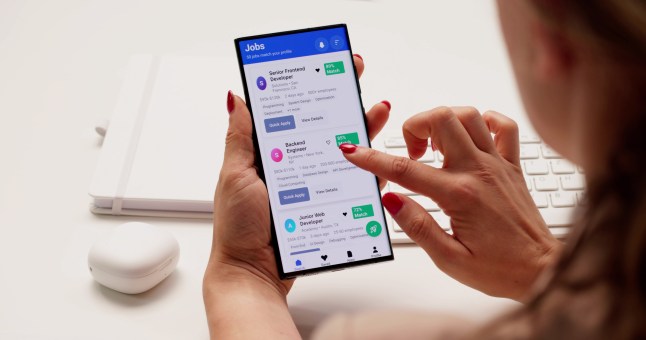
The report said that many who received the donated devices used them to apply for jobs Getty Images)
Rebecca Goshawk,director of business development at women’s aid group Solace, tells Metro this is especially an issue for domestic abuse survivors.
‘Without access to a laptop or smartphone,survivors of domestic abuse face barriers to the most basic steps needed to rebuild their lives,including applying for jobs,accessing services and staying in touch with support networks,’ she says.
Goshawk adds that the government supported Solace to provide a library of refurbished laptops for survivors.
‘The devices will be loaned with practical guidance to help women get online safely and rebuild their independence without added risk,’ she says.
‘Access to safe,secure online spaces can be a lifeline,enabling women to seek help discreetly,regain financial control and begin rebuilding their lives on their own terms.’
Government officials funded more than 80 courses with the £11.9million Digital Inclusion Innovation Fund as part of the plan,according to the progress report.
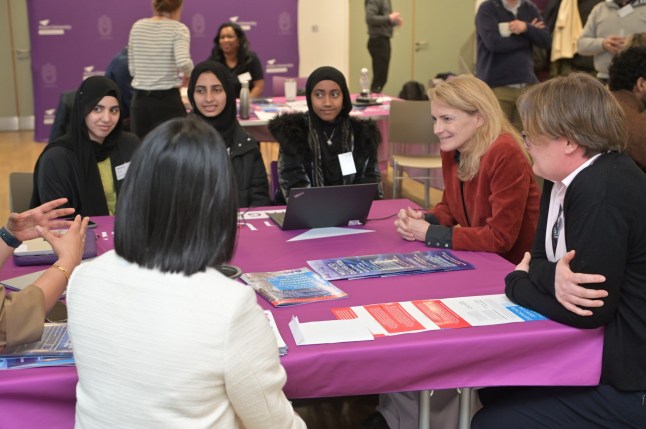
Among those is Harooj,who was out of work for 11 months when she signed up for a six-week course provided by Women’s Wellbeing.
The Birmingham mum was hired as a part-time receptionist after learning skills like using the employment platform LinkedIn and AI -powered tools,which can move at breakneck speeds.
‘Before Women’s Wellbeing,I felt stuck,but this course helped me believe in myself again and build skills I never thought I’d have,’ she said.
Minister for Digital Inclusion Liz Lloyd at a device refurb facility as part of Virgin Media O2’s programme (Picture: DSIT)
Harooj added that the course emboldened her to apply for roles she had long assumed were beyond her reach.
Dana Haidan,Virgin Media O2’s chief sustainability officer,tells Metro that the telecom giant’s donation drive is a ‘lifeline’ for people.
‘We’d encourage anyone who has a working,unused smartphone to donate it to Community Calling as it could help transform someone’s life,giving them access to essential services,and helping them stay in touch with loved ones,’ Haidan adds.
Technology secretary Liz Kendall said: ‘We want everyone in the country to be able to take advantage of opportunities of being online.
‘Whether that is staying connected with family and friends,finding work,accessing government services or getting better prices for everyday goods.
‘Our digital inclusion efforts are already changing people’s lives for the better.
‘But we are determined to go even further so we can we build a future that works for all.’
*Names have been changed by Metro to protect their anonymity.
Get in touch with our news team by emailing us at .